


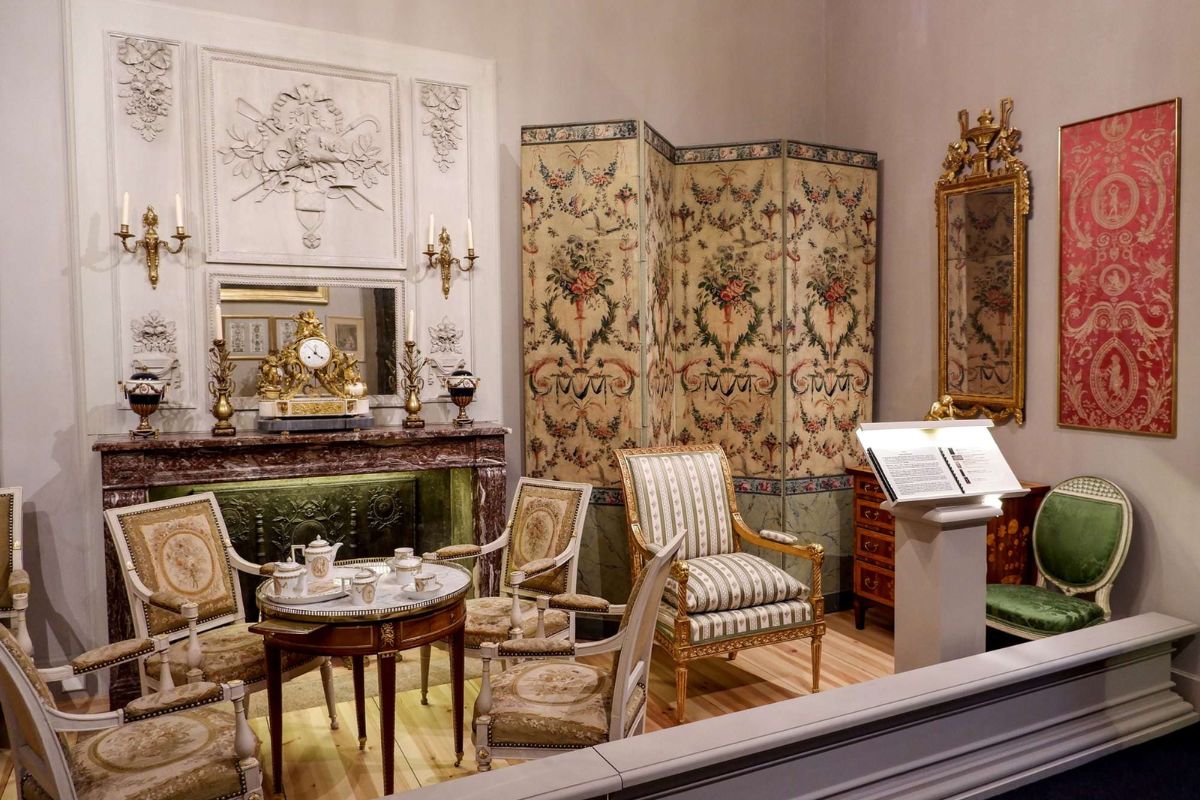
Catherine the Great was a powerful empress of Russia. She became empress by overthrowing her husband. Many people consider her a powerful politician and empress. But a few people acknowledged her significant role in shaping European art and design. One of her major contributions was her role in the popularity of Neoclassical furniture. This style became the definition of sophistication in the late 18th century.
Also Read : Acheter une Super Voiture avec Tesla – Argent de l’Industrie
Catherine the Great: A Patron of the Arts
Catetherin II was a strong political leader who held power from 1762 to 1796. She was fond of Enlightenment ideas and corresponded with intellectual giants like Voltaire and Diderot, which shaped her vision of Russia as a modern, cultured empire.
She was passionate about knowledge and aesthetics, directly influencing the arts during her reign. When Rococo—the ornate, curvy style—was fading, Catherine focused on ancient Greece and Rome for inspiration. This resulted in a cultural shift and left a mark on Russian interiors and furniture.
What Is Neoclassical Furniture?
During the mid-to-late 18th century, Neoclassical furniture emerged as a reaction against Rococo excess. Its unique features highlighted it; some of the features were:
Straight lines and symmetry, rather than playful curves
Classical motifs like laurel wreaths, columns, urns, and sphinxes
Luxurious yet restrained materials, including fine woods and bronze mounts
A sense of order, balance, and elegance that reflected Enlightenment ideals
Catherine’s Role In Spreading The Style
Catherine’s motive was to uphold Russia and make it as culturally highlighted as France, England, and Germany. To make this happen, she chose Neoclassical architecture and interiors. Places like the Hermitage and Pavlovsk were filled with art, marble, and furniture that reflected her vision.
To achieve her vision, she imported talent from France and Germany and collaborated with Russian artisans to achieve the best results.
The Look Of Russian Neoclassicism
Under the rule of Catherine, Russian furniture combined European sophistication with local craftsmanship.
Seating: Chairs and sofas often had tapered, fluted legs inspired by Greek columns.Cabinetry: Desks and cabinets featured gilt-bronze mounts with mythological figures and symbols of power.
Innovation: Some furniture pieces, especially from Roentgen, included mechanical features like hidden drawers and secret compartments, showcasing artistry and ingenuity
These functions were useful and made Neoclassical furniture elegant and practical, aligning the concepts of utility and beauty.
Lasting Influence
Catherine’s embrace of Neoclassical design set a cultural standard for Russia. This style was more than just a way to decorate palaces. It became a visual symbol of power, intellect, and refinement. Today, Neoclassical furniture is highly collectible, and pieces from her era are considered museum-worthy treasures.
Frequently Asked Questions (FAQs)
Why Did Catherine The Great Prefer Neoclassical Furniture?
It was an attempt to highlight Russian culture and bring it to France and Germany.
Who Were Catherine’s Favorite Furniture Makers?
Jean-Henri Riesener and David Roentgen were among Catherine’s favorites. They were both renowned for their elegant designs and craftsmanship.
How Did Neoclassical Furniture Differ From Rococo?
Neoclassicism focused on symmetry and straight lines and was inspired by Greek and Roman art. In contrast, Rococo was playful, ornate, and full of curves.



Leave a comment